Recently Ubuntu Touch has received a massive update. LTS 24.04 is out and improves the experience more than ever and the Youtube videos of people using Ubuntu Touch are actually impressive. PostmarketOS also has received massive updates and now supports a record number of devices. Since Fairphone has excellent hardware support for alternative operating systems, I decided to give Linux a go.
Ubuntu Touch#
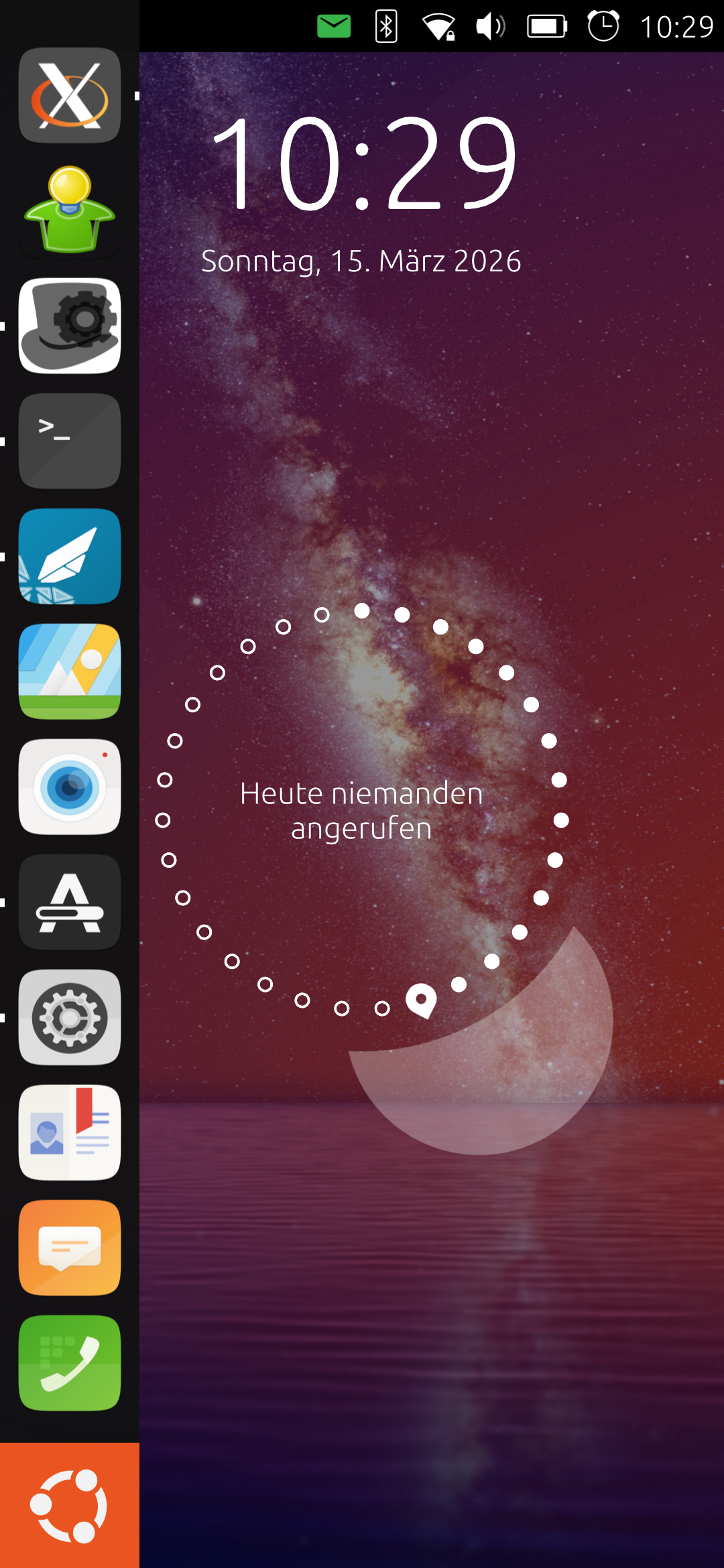
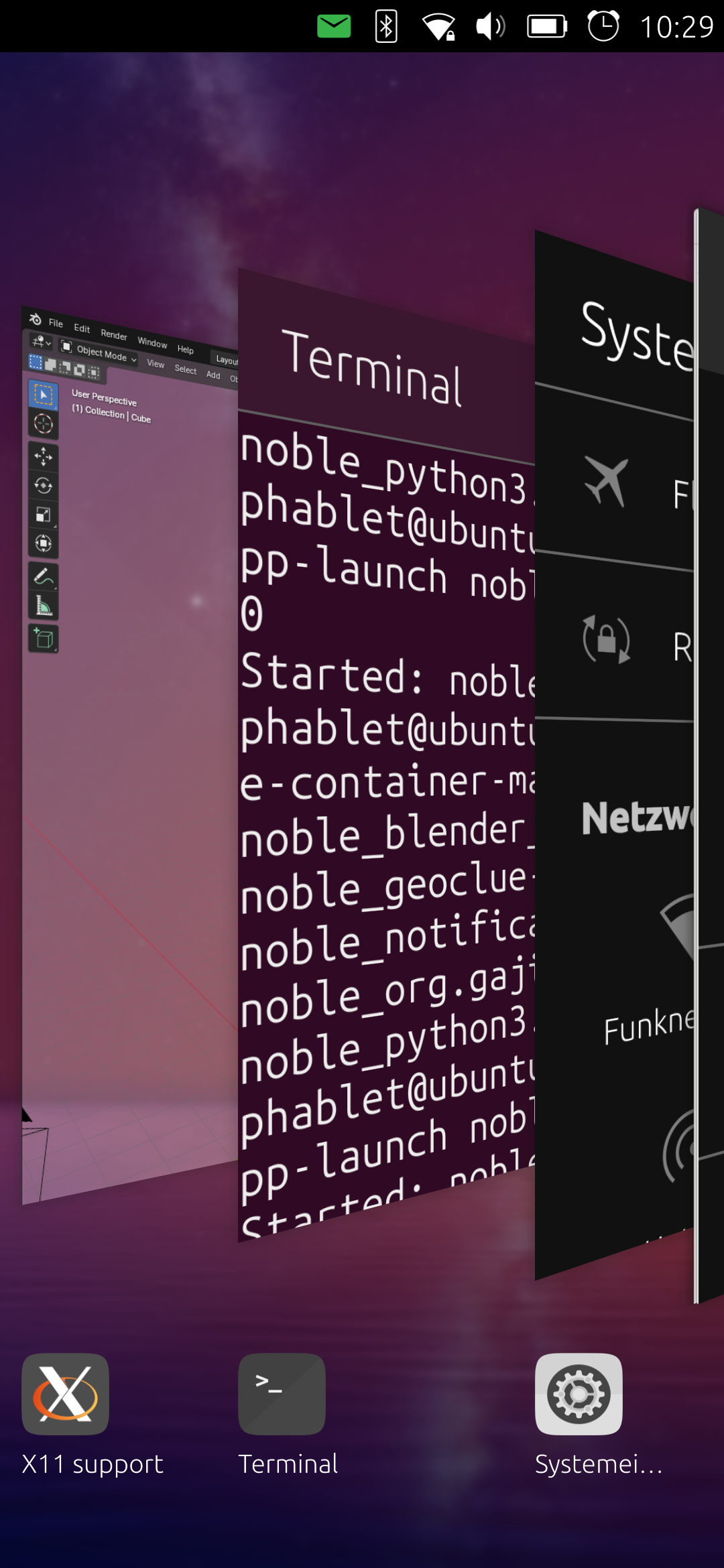
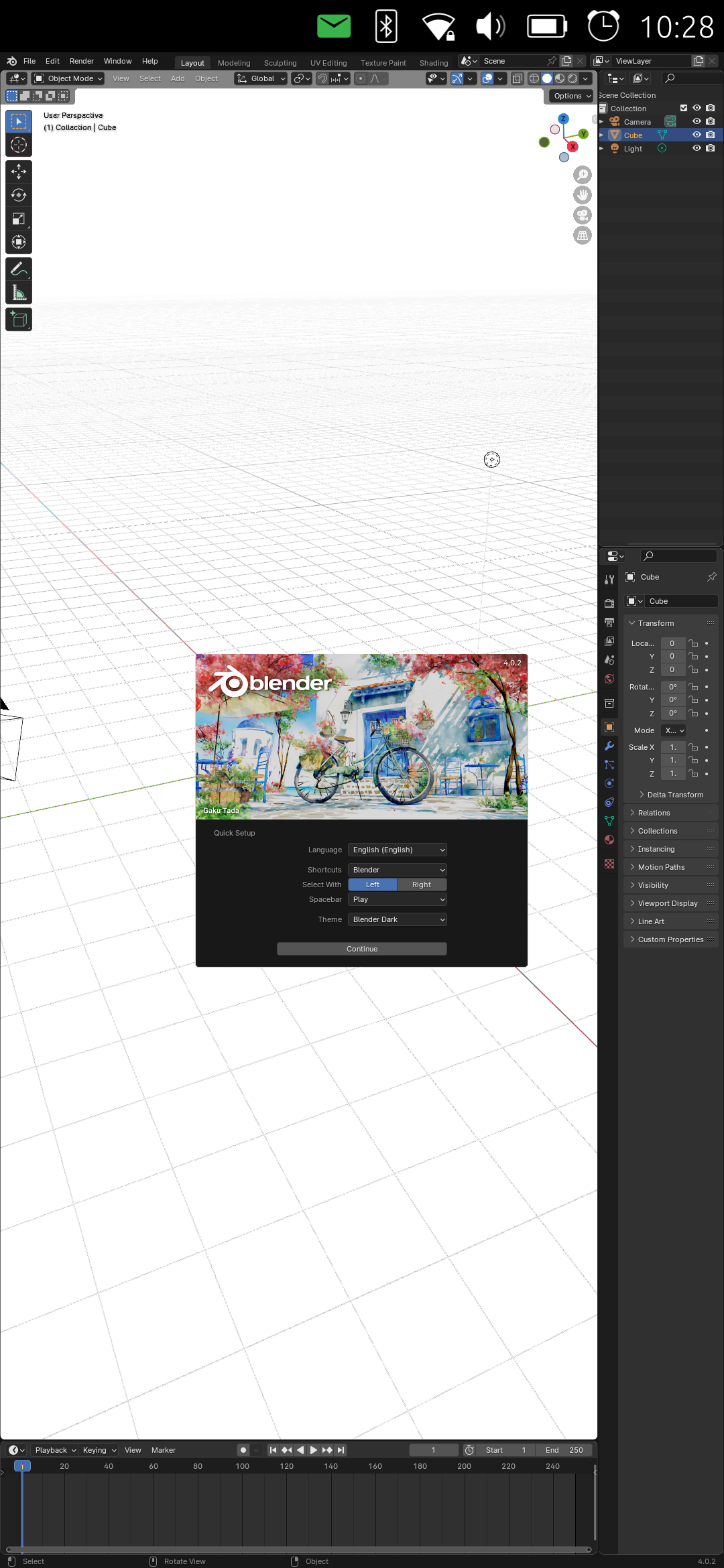
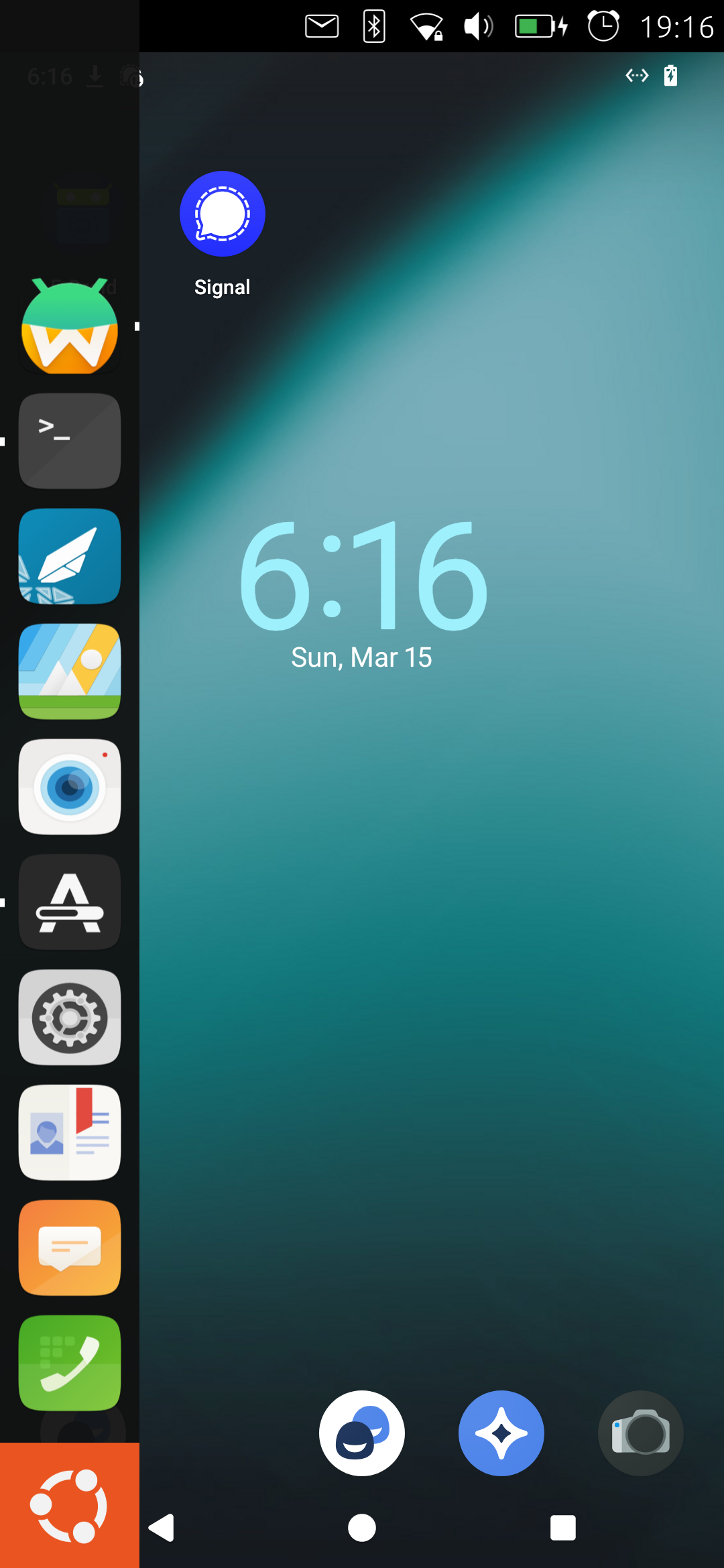
Installing Ubuntu Touch was quite simple with UBPorts installer. I was already willing to give Ubuntu Touch a try years ago, so I was very excited! The OS looks beautiful. The Suru theme is chique and reminds me a lot of my first Linux distro: Ubuntu 18.10 Cosmic Cuttlefish. It has a very unique UI called Lomiri. It’s very different, but also very polished. Calling (including VoLTE) works out of the box, the camera works well and the battery usage is small. It is possible to run Android apps via Waydroid and Debian and Snap packages via Libertine. The experience is really good albet a bit unintuitive, except of course for the small number of available apps. I’m especially missing Firefox or Chromium, which is why I had trouble with some captive portals, but thanks to Waydroid the issue is not as bad, but it kind of defeats the purpose of moving to another OS. Convergence is amazing! I managed to install Linux apps like Blender, Godot and Firefox, but their performance in Libertine made it very clear that the applications are running in a container. All in all, Ubuntu Touch is very polished and is usable as a basic daily driver!
However the biggest drawback is when you open the terminal. The file system is read only and while it is possible to temporarily disable the restrictions, you cannot natively install apps via apt or flatpaks. I could not execute sudo apt update or even install Neofetch and many terminal tools like curl are missing. Ubuntu Touch is not a true Linux experience because it is way too restrictive and this is a major drawback on a system that primarily appeals to people looking for freedom from big tech. Ubuntu Touch uses Halium, an android layer, which should improve hardware compatibility, yet it is available for less devices than PostmarketOS and still includes Android components.
PostmarketOS#
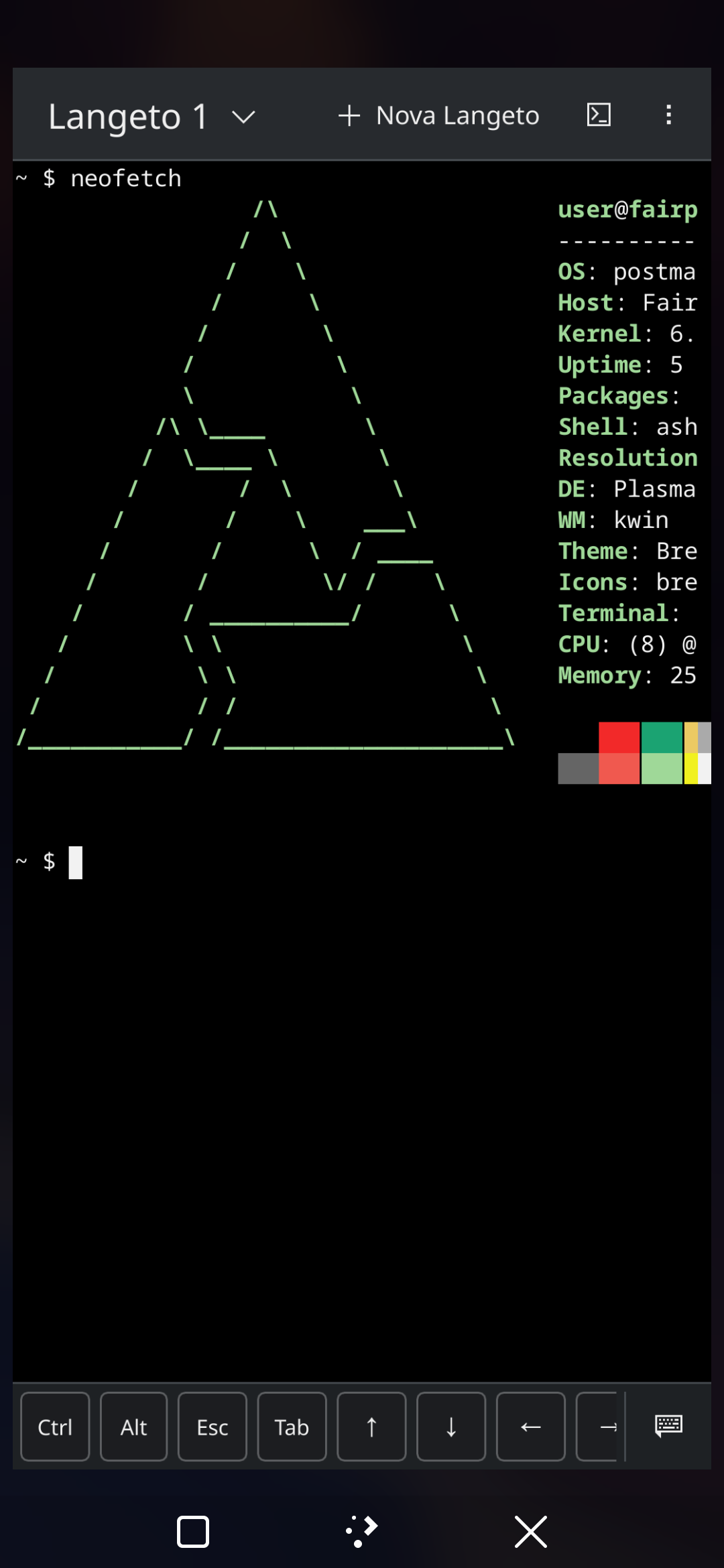
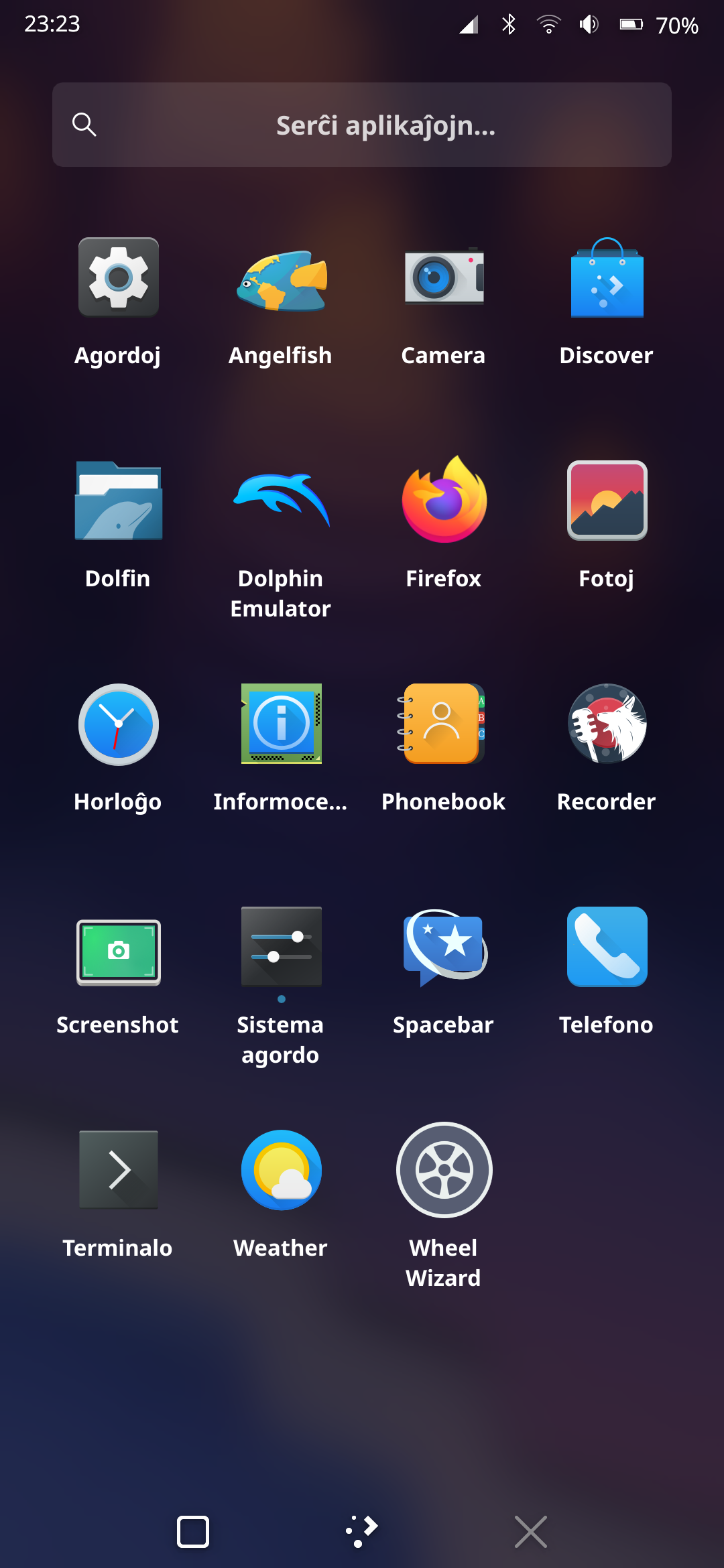
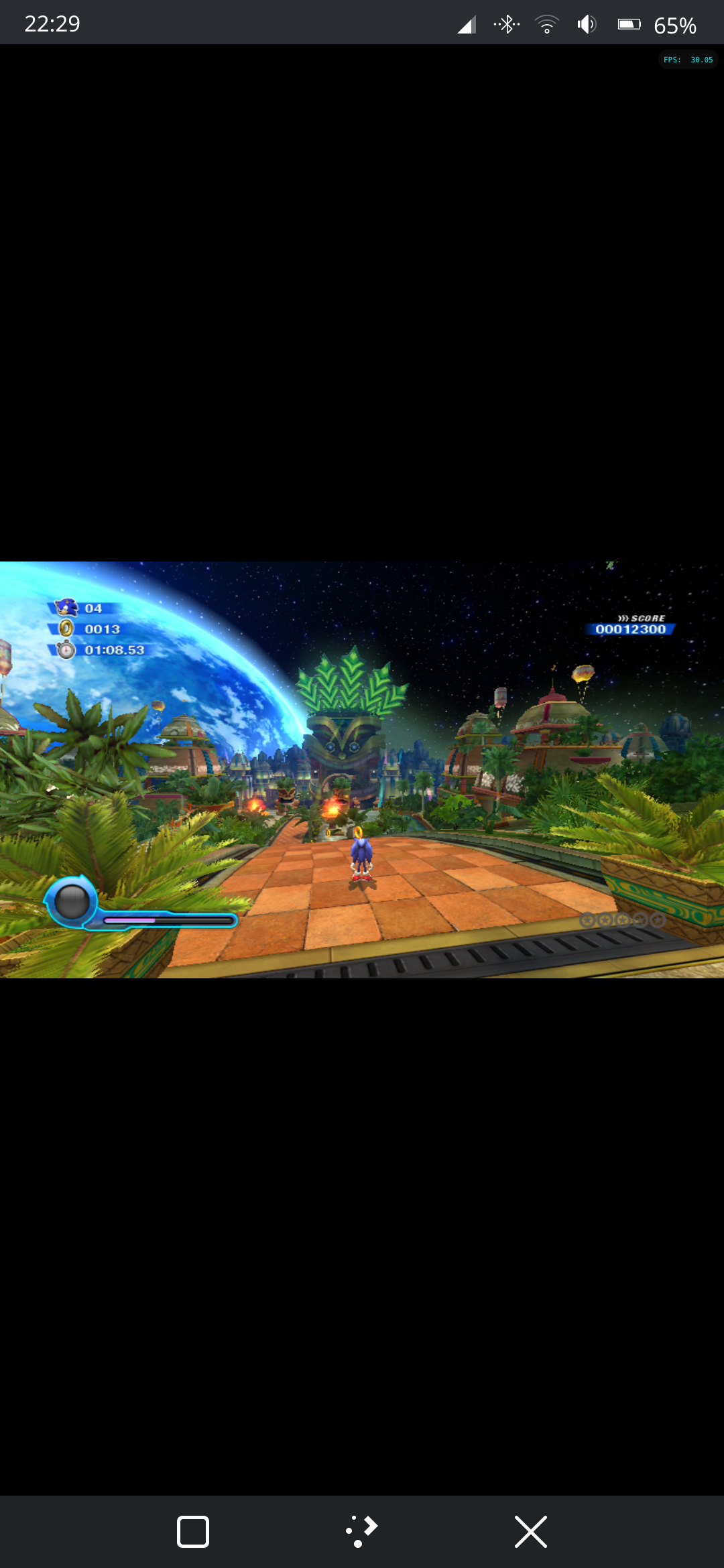
PostmarketOS is pure Linux with no Halium and is based on Alpine Linux, it was a community project from the get go and its main purpose is to extend the life of devices. This is becoming increasingly important as older Android devices cannot use many apps nor update them. I decided to install pmOS with Plasma Mobile and it looks really good. The UI needs a bit more polish, but it’s much closer to Android and more intuitive. While I prefer Ubuntu Touch’s Suru theme and font, overall Plasma Mobile convinced me more and it also supports convergence. Right off the back you can install any Linux app with apk (like on Termux) or with Flatpaks. I even managed to install WheelWizard so theoretically it could even be possible to play Mario Kart Wii: Retro Rewind online. I also tested Dolphin with Vulkan and the performance is honestly quite good, but of course not as good as on Android. This was already my experience on the Raspberry Pi, where Dolphin on Linux simply did not perform as well as on Android due to better graphics drivers. But this is still remarkable! You can install desktop Linux apps and run them very well, because they are not in a container. I could also switch to Esperanto, which I could not do on Ubuntu Touch. Installing Firefox also massively reduced my dependence on Waydroid and many Linux programmes, like Firefox, also have a mobile-friendly UI. All in all, I was amazed by PostmarketOS!
While the SIM card got recognised, telephony does not work (probably because my service provider likes to rely on VoLTE). The camera also does not work well and it is not uncommon to see bugs in the UI. Energy usage with Plasma Mobile is also very high, I could physically feel my phone getting warmer. Automatic rotation and GPS also do not work. PostmarketOS sadly is not ready yet as a daily driver.
Conclusion#
The world of mobile Linux has made significant progress, but we’re not quite there yet. Ubuntu Touch is daily drivable, but while it’s very polished, it’s lacking software support and is too restrictive. The real Linux experience comes with PostmarketOS, the software availability is amazing and the operating system has a ton of potential, but sadly it is not yet daily drivable because of its severe lack of polish on the hardware side.
In my opinion, mobile linux could be a good option for tablets and very old phones, but certainly not for new phones at the moment, especially because better alternatives exist. /e/OS for example offers all the benefits of Android (huge number of apps, better graphics drivers, polish etc.), while being completely degoogled and even offering more privacy thorugh its tracker blocking and location spoofing. At least until Google does not decide to target custom ROMs, custom android ROMs are the best private and free mobile OS choice, though of course I’ll be taking another look at PostmarketOS in September, when Google will massively restrict FOSS software on Android. It will be interesting to see how the custom ROM world responds.
I would like to finish this short report by praising Fairphone. They provide all the necessary guides for installing alternative OSes for all of their devices and Android versions, including useful hints and warnings. That is very commendable, which is one more reason, why I love my Fairphone 4